


In the planning and execution of railway infrastructure, geological investigations for railway construction and geomechanical investigations for railway construction play a crucial role. Track stability, the safety of structures, and the long service life of the railway system are directly linked to an accurate assessment of the soils and rocks on which the works are founded.
Geological investigations for railway construction
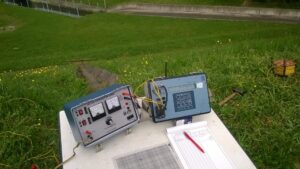 Geological investigations for railway construction comprise a comprehensive analysis of geological conditions along the proposed alignment. They examine lithological composition, tectonic features, the presence of groundwater, and geologically induced hazards such as landslides, settlements/subsidence, or erosion. These data help designers determine the optimal route and ensure safe and cost-effective construction.
Geomechanical investigations for railway construction
In addition to geological studies, geomechanical investigations for railway construction are indispensable. Their aim is to determine the mechanical properties of soils and rocks—such as bearing capacity, shear strength, compressibility, and permeability. The results form the basis for designing the foundations of railway structures, viaducts, bridges, tunnels, and retaining systems along the tracks.
Importance for safe and sustainable construction
Combining geological and geomechanical investigations enables precise risk assessment and the preparation of reliable technical solutions. In this way, unwanted settlements and deformations are prevented, and maintenance costs during railway operation are reduced.
Through professionally executed investigations, sustainable, safe, and efficient development of railway infrastructure is ensured—essential for the long-term growth of transport and the connectivity of regions.