


Construction activity is a complex process that involves numerous technical, legal, and environmental aspects. The stability of foundations directly affects the safety of buildings and is closely linked to soil quality. Soil quality determines whether deep foundations must be designed or if shallow foundations are sufficient. Proper planning of residential construction requires an analysis of soil, location, structural requirements, and urban planning restrictions. Soil compaction planning is a key part of site preparation, as it reduces settlement and increases foundation bearing capacity.
The purpose of this article is to present the key principles, challenges, and solutions for stable, sustainable, and cost-efficient construction.
Planning Deep Foundations
Definition and Importance of Deep Foundations
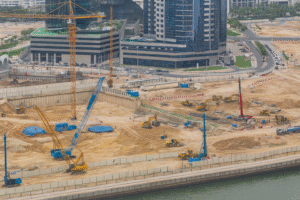
Planning deep foundations is necessary when soil cannot bear the building load with shallow foundations. Deep foundations transfer loads to deeper, more stable soil layers, ensuring the safety and durability of the structure. Shallow foundations are used primarily for smaller buildings and solid ground, while deep foundations make possible the construction of larger structures or building on challenging soils.
The need for deep foundations is determined by geotechnical surveys, building loads, and hydrological conditions. In non-residential structures such as industrial halls or warehouses, deep foundations are often standard. They are also essential in areas with a high groundwater table or unstable soil layers.
Types of Deep Foundations
The most common types of deep foundations are piles, which may be concrete, steel, or composite, depending on the load and geological conditions. Driven and bored piles allow fast load transfer to deeper layers. Caisson foundations and box foundations are traditional solutions, mainly used for special structures or cultural heritage buildings.
The choice of foundation type depends on soil bearing capacity, groundwater level, and nearby structures. Proper selection can significantly reduce maintenance costs and the risk of settlement. Each method has its advantages and limitations, which must be considered during design.

Factors Influencing Design
When planning deep foundations, it is crucial to account for soil type, geotechnical characteristics, and soil layering. Soil bearing capacity defines how much load can be supported without settlement or deformation. The depth of stable soil layers is decisive for pile type selection. Hydrological conditions, such as groundwater level, affect both execution and long-term durability. Seismic activity and extreme weather may require additional measures, such as reinforcement or soil grouting. It is also important to consider impacts on surrounding areas and neighboring structures.
Technical and Regulatory Requirements
Slovenian standards define minimum requirements for foundation sizing, materials, and construction methods. Planning deep foundations must include load-bearing checks, soil testing, and documentation. Best practices involve post-construction settlement monitoring and the use of durable materials such as reinforced concrete or steel. Designers must comply with all regulatory provisions to ensure safety and legal compliance. Certain regulations also require contractor certification and quality control during construction. Proper implementation of these standards reduces error risks and extends building lifespan.
Special Features and Challenges
Designing foundations in challenging geological conditions is the greatest difficulty. Seismic activity and extreme climate may demand additional measures. Costs of foundation types vary greatly, so selecting the optimal method is key for economic efficiency. Time requirements and logistical constraints must also be considered. For industrial buildings, coordination with heavy loads is critical. Every project requires a tailored solution adapted to local geological and infrastructural conditions.
Planning Soil Compaction
Importance and Objectives
Soil compaction planning is crucial for reducing settlement and increasing bearing capacity. Effective compaction improves stability for both residential and non-residential buildings. Without proper treatment, foundation deformations, cracks, and structural damage may occur. The objective is to ensure optimal soil strength and prevent long-term operational issues. Proper compaction also allows more predictable costs and reduces risks of additional works. In residential construction, soil compaction is particularly important for safety and comfort.
Methods of Compaction
Several compaction methods exist, adapted to soil type and site accessibility. Dynamic compaction uses vibratory or impact rollers, suitable for sand and gravel. Static compaction involves geotechnical consolidation, which works more slowly but ensures long-term stability. Soil grouting with cement or chemical agents is applied to unstable or water-saturated soils. The choice of method depends on soil type, layer depth, and groundwater level. On complex sites, a combination of methods is often necessary for optimal results.
Factors Affecting Effectiveness
Effectiveness depends on soil type—sand compacts differently from clay or gravel. Water content and groundwater levels strongly affect post-compaction soil strength. Layer depth and thickness determine how deep compaction must reach. Environmental conditions, such as seasonal and weather impacts, can influence results. Post-compaction monitoring is also crucial to detect deformations early. In residential projects, soil strengthening ensures higher safety and durability.
Special Features and Challenges
Compaction on hard-to-reach sites is technically demanding and often more expensive. Impacts on nearby structures require additional planning and monitoring. Costs and time demands are often limiting factors. In urban areas, noise and vibration reduction during dynamic compaction must be considered. For industrial facilities, uniform soil bearing capacity under heavy loads is essential. Together with deep foundation planning, soil compaction methods form the basis of stable, sustainable construction.
Planning Non-Residential Construction
Types of Non-Residential Buildings
Non-residential buildings include offices, administrative buildings, warehouses, logistics centers, shopping and entertainment complexes, and industrial plants. Each type has specific requirements for load-bearing, spatial layout, and technical installations. Residential and non-residential planning differs primarily in loads and functional requirements. Industrial buildings demand heavy-load resistance, while offices prioritize comfort and ergonomics. Correct building type selection influences sustainability and cost efficiency.
Design Features
In non-residential construction, higher loads on structures and slabs must be considered. Special requirements include engineering systems such as ventilation, electrical installations, and fire safety. Spatial layouts must enable efficient movement of people and equipment. Adaptation to storage and production processes is key for operational functionality. Soil compaction planning relates directly to stability under heavy loads. Integration with logistics and transport infrastructure is also important.
Materials and Technologies
Durable materials such as reinforced concrete, steel, and composites ensure long service life. Modular and prefabricated systems allow faster and more flexible construction. Material choice impacts costs, execution time, and maintenance. For both residential and non-residential buildings, design must balance sustainability, economy, and technical demands. Combining modern and traditional materials optimizes projects, while energy-efficient technologies are becoming standard.
Regulations and Legal Aspects
Compliance with industrial and commercial standards is mandatory for legality and safety. Energy efficiency and occupational safety standards influence design and execution. Licensing and permitting ensure legal compliance. Documentation of deep foundations and soil compaction plans must be approved. Regulatory compliance reduces risks and long-term legal consequences, while also optimizing costs and timelines.
Special Features and Challenges
Non-residential projects must account for heavy loads on foundations and soil. Coordination with logistics and transport infrastructure ensures smooth operation. Local regulations often demand minimal impact on neighbors and surroundings. For industrial facilities, even load distribution is critical. Residential projects face similar challenges, though with lower loads and greater focus on comfort and sustainability. Every project requires an integrated design and execution approach.
Planning Residential Construction
Design Phases

Residential planning begins with a pre-project analysis, including location review, legal conditions, financing, and urban context. The next phase is architectural design, which defines functionality, aesthetics, and spatial layout. Structural design covers material selection, dimensioning of load-bearing elements, and load considerations. Deep foundation and soil compaction planning are integral, as stable foundations and strong soil ensure sustainability. Technical documentation, permits, and coordination with utilities follow. Careful documentation of each phase ensures safety, durability, and compliance. Energy efficiency and seismic resistance must also be considered.
Construction Materials and Technologies
Material choice impacts sustainability, costs, and ecological footprint. Traditional materials include concrete, brick, and wood—proven and durable. Modern technologies such as modular construction and energy-efficient materials enable faster building and reduced energy costs. Combining materials optimizes costs and adapts to urban conditions. Durable materials reduce maintenance needs and extend service life. Material selection must comply with regulations and energy efficiency standards while considering environmental impacts.
Legal and Regulatory Requirements
Building permits and zoning are central in residential planning. Energy efficiency standards ensure low energy use and comfort. Environmental protection requires monitoring construction impacts on nature and neighboring structures. Regulations define fire safety, infrastructure, and accessibility requirements. Proper compliance prevents legal issues and extra costs. Inspections and contractor certification are often mandatory. Deep foundation and compaction design must meet all regulatory requirements.
Special Features and Challenges
Urban planning restrictions often limit building size and height. Optimal space use is key for comfort and functionality. Adaptation to seismic and climate conditions ensures safety and durability. In dense urban areas, construction impact on neighbors and infrastructure must be minimized. Modern technologies improve energy efficiency and reduce operating costs. Residential design must also consider comfort, accessibility, and future adaptability. Successful planning requires integrating all phases, from foundations to finishing works.
Conclusion
Stable foundations, soil quality, and effective compaction planning are the basis for safe and sustainable construction. Deep foundation planning ensures buildings can withstand designed loads and remain stable over time. Well-thought-out residential and non-residential design optimizes costs, durability, and safety. Key practices include thorough soil analysis, proper foundation selection, use of durable materials, and compliance with regulations. Integrating these factors reduces risks of settlement, deformation, and construction failures. Proper planning ensures long-term functionality, resident comfort, and cost-efficient maintenance.
In conclusion, all elements—foundations, soil strengthening, and building design—are interconnected and crucial for a successful construction project.