
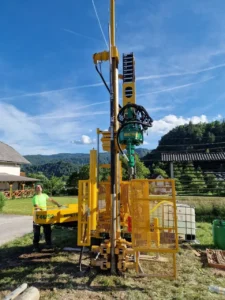


Monitoring in construction, mining, and infrastructure management is today an indispensable part of ensuring safety, sustainability, and environmental responsibility. Modern projects require precise monitoring of environmental and structural impacts; therefore, the preparation of expert opinions in the field of monitoring is a key basis for appropriate decision-making by investors, designers, and supervisors.
Monitoring enables timely detection of problems, reduction of risks, and effective planning of preventive and remedial measures.
Preparation of Expert Opinions in the Field of Monitoring
Expert opinions are based on collected data, measurements, and analyses. They include assessment of the current state, interpretation of results, and recommendations for future measures. Such opinions are important in the preparation of project documentation, permitting procedures, and also in dispute resolution.
Development of Monitoring Programs and Studies
Every monitoring process begins with a well-thought-out plan. Developing monitoring programs for construction impacts includes defining methods, frequency of measurements, and monitoring areas. At the same time, monitoring studies are prepared, which serve as a professional basis for assessing environmental impacts and the long-term operation of facilities.
Programs vary depending on the type of project—short-term monitoring for construction sites or long-term monitoring for tracking the stability of mining areas.
Management and Execution of Monitoring
High-quality monitoring requires professional coordination. Management and execution include the selection of appropriate measuring equipment, ensuring data accuracy, regular calibration of devices, and systematic archiving of results. Without consistent management, the value of measurements is greatly reduced.
Types of Measurements and Monitoring
Inclinometer Measurements
Inclinometer measurements are among the most common methods for monitoring soil and structural stability. Inclinometers detect horizontal displacements that may indicate risks of slope failures or damage to supporting structures.
Tilt Meter Measurements
Tilt meters are used to monitor the stability of tall and sensitive structures. Tilt meter measurements allow for early detection of settlement, tilting, or other structural deformations.
Deformation Measurements
Deformation measurements are carried out using various methods: geodetic, optical, and modern laser technologies. Such measurements are indispensable in monitoring tunnels, embankments, dams, and other large structures.
Remote Monitoring
Modern technologies enable remote monitoring, meaning that data is automatically transmitted in real time. This allows for fast processing, analysis, and response, while reducing the need for constant on-site presence.
 Monitoring Impacts on the Environment and Infrastructure
Every construction or mining activity affects its surroundings. Therefore, monitoring impacts on the environment and infrastructure is essential.
Infrastructure impacts: include monitoring of settlements, vibrations, and effects on traffic structures.
Environmental impacts: include monitoring of noise, dust, vibrations, and groundwater effects.
Such monitoring enables timely implementation of measures to protect residents and the environment.
Monitoring in Different Phases
Monitoring During Operation
Monitoring impacts during the operation of construction facilities or mines is crucial for safe functioning. Continuous data tracking enables recognition of trends and early warning signs of instability.
Monitoring After Mine Closure
Risks do not end when a mine is closed. Monitoring after mine closure tracks long-term consequences such as soil subsidence, water inflows, or the release of hazardous gases. This is essential for protecting people and infrastructure even decades after mining activities have ceased.
Data Analysis and Interpretation
Raw data only gain value after proper analysis. Statistical processing, graphical representations, and 3D models help in understanding processes. Linking results with digital tools such as BIM and GIS allows forecasting of future changes and preparation of preventive measures.
Conclusion
Monitoring is the foundation of modern construction and mining. Without precise measurements, it is impossible to ensure safety, reliability, and sustainability of structures. A comprehensive approach—including the preparation of expert monitoring opinions, proper management and execution, the use of modern methods such as inclinometer measurements, tilt meter monitoring, deformation measurements, and remote monitoring—ensures responsible management of the environment and infrastructure.
Only by consistently performing monitoring at all stages—from planning, through construction and operation, to mine closure—can we guarantee a safe future for people and the environment.