
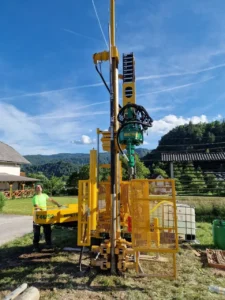

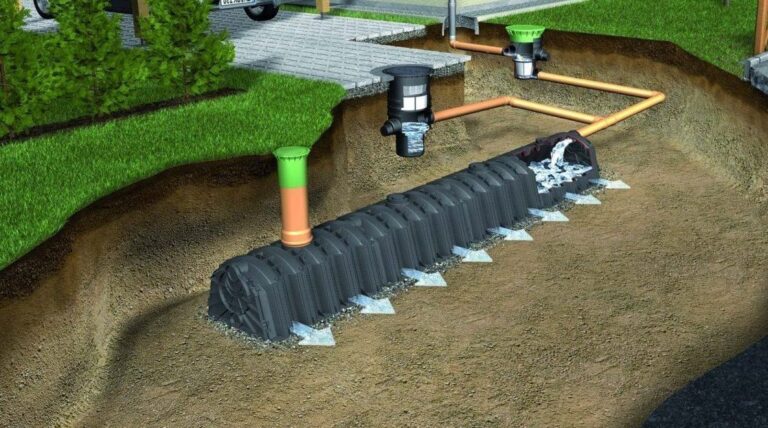


Geotechnical design is one of the key fields of modern construction in Slovenia, as it directly affects the safety, sustainability, and cost-efficiency of structures. Excavations, steep slopes, and areas prone to landslides require carefully considered solutions. In doing so, Slovenian construction legislation, the SIST EN 1997-1 standard (Eurocode 7: Geotechnical Design – General Rules), and regulations governing resistance and stability of structures must be respected.
Design of Excavation Support
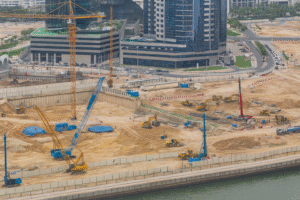
For large excavations in Slovenian cities and urban areas (e.g., the Ljubljana Market project), construction pits must be supported with appropriate structures such as diaphragm walls of reinforced concrete, anchored systems, and sheet pile walls.
Legal and regulatory basis:
Geological and hydrogeological surveys, determination of soil types, groundwater pressures, and loads from nearby structures are mandatory before commencement.
Projects must comply with SIST EN 1997-1, which defines procedures for geotechnical data, stability assessment, safety factors, and construction monitoring.
The Construction Act (GZ-1) and by-laws require that structures are designed, built, and maintained so that collapse, excessive deformations, or damage to neighboring property are prevented during construction and operation.
Technical methods:
Use of drainage and groundwater lowering systems.
Anchored systems, piles, or micropiles.
Monitoring systems: tracking deformations, wall inclinations, and groundwater levels. Such observation systems are legally required in projects involving complex excavations or potential environmental impacts.
Design of Retaining Walls
Retaining walls are essential where terrain is uneven, slopes need stabilization, or height differences must be preserved.
Slovenian regulation:
According to the Regulation on Classification of Structures, retaining walls are categorized as simple, less demanding, moderately demanding, or demanding structures. Permit requirements vary by wall height, depth, and load span.
Example: a wall with a height difference up to 1 m, depth up to 2 m, and load span up to 4 m is considered a simple structure – no building permit or construction notification required. Larger dimensions demand additional permits.
Technical aspects:
Foundations on suitable load-bearing soil (e.g., compacted sands or well-compacted gravel).
Execution of base slabs or strip foundations, reinforcement installation, and appropriate concrete class.
Consideration of soil and hydrostatic pressures: drainage systems for backwater, filters for drainage pipes.
Waterproofing, if necessary, to prevent damage from moisture or material corrosion.
Design of Landslide Remediation
Due to terrain and rainfall, Slovenia has a high susceptibility to slope instability. Landslide remediation requires:
Detailed geological, geotechnical, and hydrological analysis. Use of inclinometers, boreholes, and geophysical methods to determine landslide depth and soil movements.
Application of stability factors and safety coefficients in line with Eurocode EN and Slovenian national annexes.
Measures: drainage, anchoring, micropiles, retaining walls, catch embankments, and bioengineering techniques (vegetation, anti-erosion meshes).
Legal and administrative aspects:
The Construction Act (GZ-1) and the Regulation on Mechanical Resistance and Stability of Structures require that stability is ensured throughout the entire service life.
Landslide remediation projects, particularly those affecting public infrastructure or multiple land parcels, must be approved by the competent municipal authority, often with a geotechnical expert opinion.
Integrated Approach and Monitoring Requirements
As with excavation support and retaining walls, landslide remediation requires collaboration of geologists, geotechnical engineers, structural engineers, and hydrologists.
Geotechnical monitoring during and after execution is legally mandated whenever safety, environmental impacts, or significant liability are involved.
Projects must comply with European and Slovenian standards, including SIST EN 1997-1, the Regulation on Mechanical Resistance and Stability of Structures, and the Construction Act (GZ-1).
Conclusion
Designing excavation support, retaining walls, and landslide remediation in Slovenia involves not only applying appropriate technical methods (diaphragm or sheet pile walls, retaining structures, anchoring, drainage, waterproofing) but also strict compliance with legal and regulatory frameworks. Early involvement of experts, preparation of detailed design documentation, monitoring, and proper classification of structures (simple, less demanding, etc.) are crucial for ensuring safety, risk reduction, and long-term sustainability.